

Introduction
The kidneys are the body’s natural filters, keeping our blood clean and balanced. But for them to work properly, they need a constant blood supply. This is where the function of renal artery and renal vein come in. These two blood vessels are like highways—one bringing in blood full of oxygen and waste, and the other carrying away clean, filtered blood.
For biology students, especially those preparing for exams, understanding the functions of the renal artery and renal vein is crucial. Let’s break it down in simple terms.
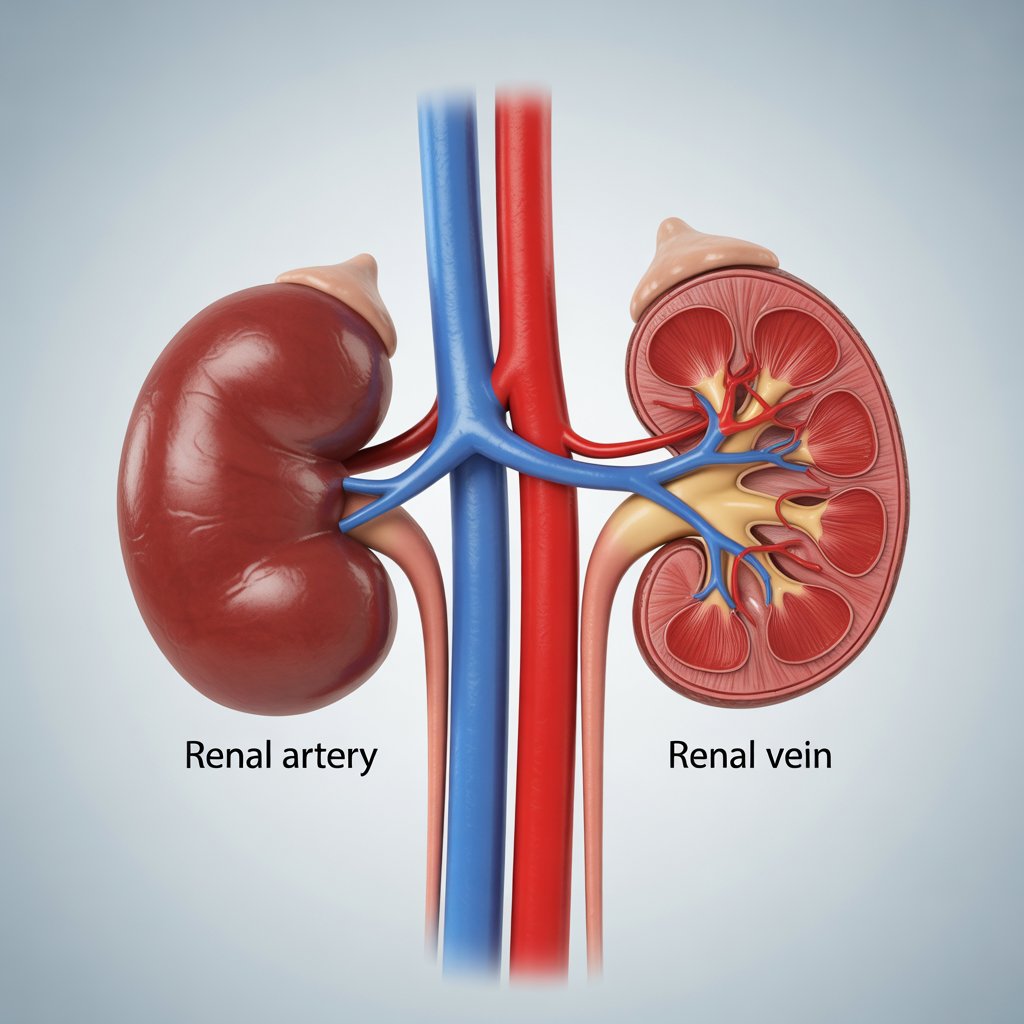
Structure of Kidney Blood Supply
- The renal artery branches off from the abdominal aorta and enters each kidney.
- The renal vein connects to the inferior vena cava, which carries blood back to the heart.
- Each kidney has one renal artery and one renal vein.
Porifera Phylum Classification Notes for Biology Students👉 Imagine it like this: the artery is the “incoming road” delivering supplies and waste to be cleaned, while the vein is the “outgoing road” carrying fresh, filtered blood back to circulation.
Function of the Renal Artery
The renal artery has three main functions:
- Supplies oxygenated blood to the kidney tissues.
- Delivers nutrients so kidney cells can function properly.
- Carries waste-filled blood (like urea, creatinine, and extra salts) into the kidney for filtration.
In short, the renal artery is like a delivery truck that brings both “essentials” (oxygen, nutrients) and “dirty laundry” (wastes) to the kidney.
Function of the Renal Vein
Once filtration is complete, the renal vein does the opposite job:
- Carries deoxygenated blood away from the kidneys.
- Transports filtered blood, with waste products removed, back into the bloodstream.
- Helps maintain fluid and electrolyte balance, preventing harmful buildup.
Think of the renal vein as the “clean-up crew,” taking purified blood back into circulation after the kidneys finish their work.
Renal Artery vs. Renal Vein – Key Differences
| Feature | Renal Artery (To Kidney) | Renal Vein (From Kidney) |
|---|---|---|
| Oxygen Content | High (oxygen-rich) | Low (oxygen-poor) |
| Waste Content | High (urea, salts, toxins) | Low (mostly removed) |
| Direction of Flow | From heart → kidney | From kidney → heart |
| Type of Blood | Oxygenated | Deoxygenated (but cleaner) |
This simple comparison makes it easy to remember for exams.
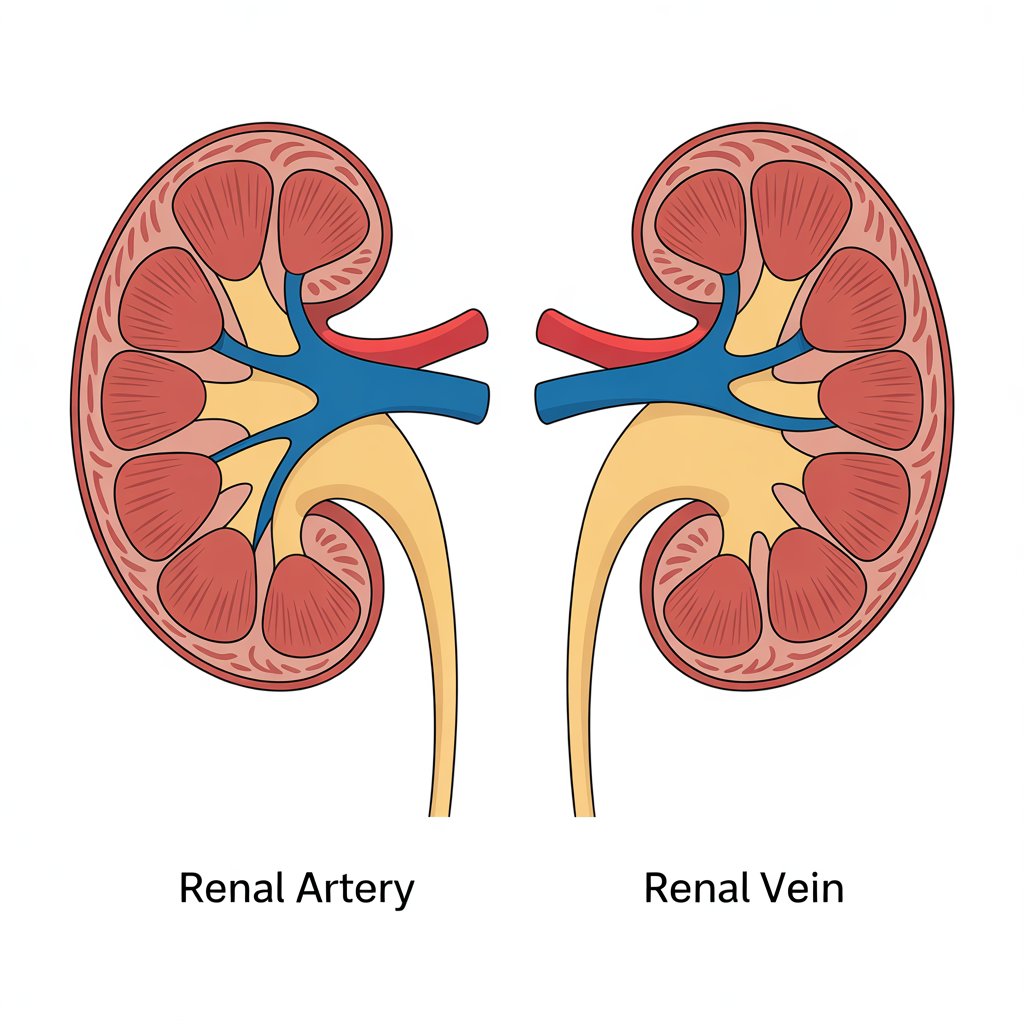
Importance in Human Physiology
- Without the renal artery, kidneys would not receive oxygen and nutrients.
- Without the renal vein, clean blood would never return to circulation.
- Together, they keep the kidneys functioning as natural filters, regulate blood pressure, and maintain homeostasis (balance in the body).
Clinical Relevance (For Higher-Level Students)
- Renal artery stenosis: narrowing of the renal artery, leading to high blood pressure and kidney damage.
- Kidney transplants: surgeons carefully connect renal arteries and veins of the donor kidney to the recipient’s blood vessels.
- Dialysis patients: rely on artificial methods when blood flow through renal arteries/veins is impaired.
Conclusion
The renal artery and renal vein work as a perfect team. One brings in oxygen-rich, waste-filled blood, while the other takes away deoxygenated, filtered blood. Together, they ensure the kidneys can do their life-saving job of filtering wastes and keeping our internal environment balanced.
For students, remembering this simple “in-and-out highway” concept makes the functions of the renal artery and renal vein easy to recall during exams.




Pingback: Connective Tissue and Their Types: Structure, Functions, and Example
Pingback: “What is Projectile Motion with Example? Easy Physics Notes” - a2ztrendy.com