
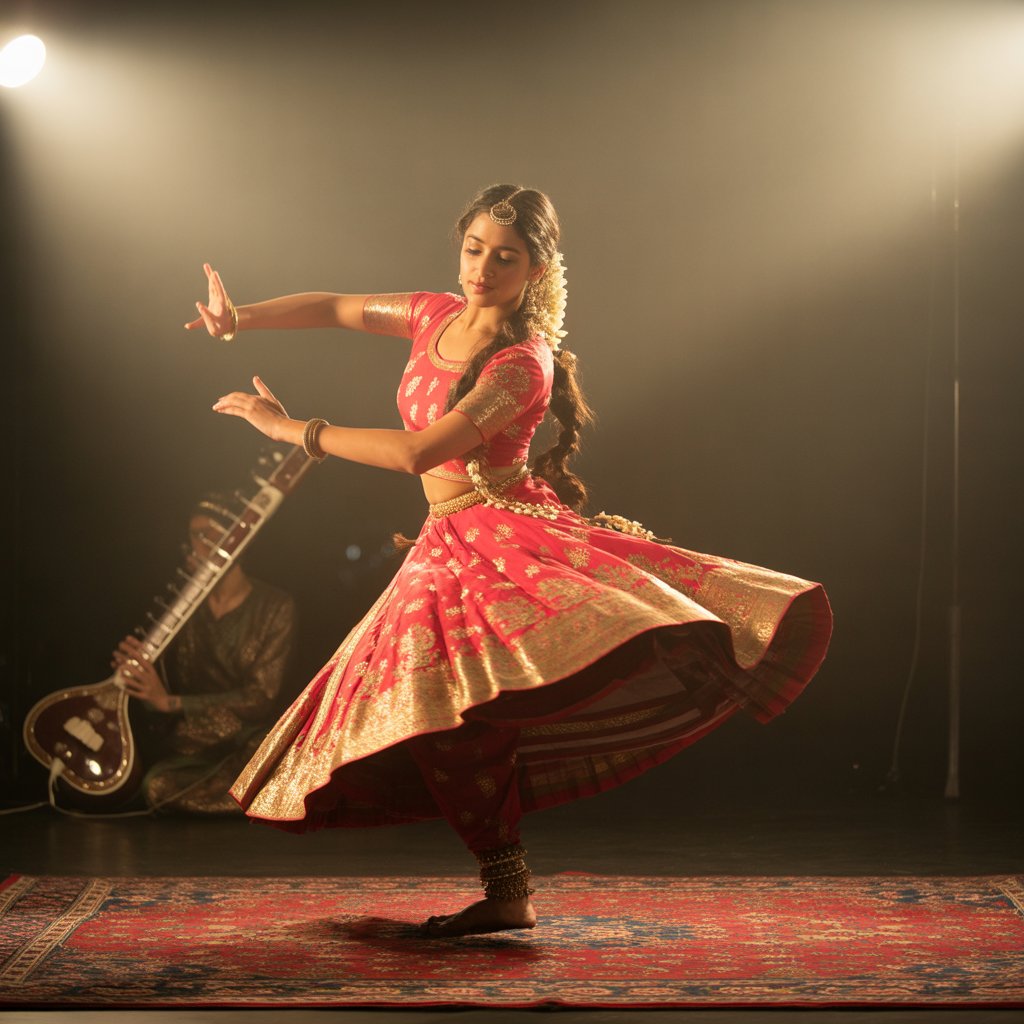

Who Were The Major Patrons Of Kathak? To truly understand Kathak, we must look beyond the dance itself and explore the people who nurtured and protected it through centuries. Kathak did not become a classical art form overnight. It began as a simple storytelling tradition in temples, where performers shared stories of Krishna through graceful movements, expressions, and rhythmic footwork.
As time passed, this beautiful art form caught the attention of royal courts. The rulers of the Mughal Empire**, along with the Nawabs of Awadh and Rajput kings, saw its charm and offered their support. Their patronage gave Kathak a new identity. It evolved in style, costume, music, and presentation, becoming more refined and sophisticated.
When we ask who were the major patrons of Kathak, we are really exploring the powerful figures who believed in art and ensured that this dance survived political changes and social transformations. Their encouragement allowed Kathak to flourish and become one of India’s most celebrated classical dance forms today.
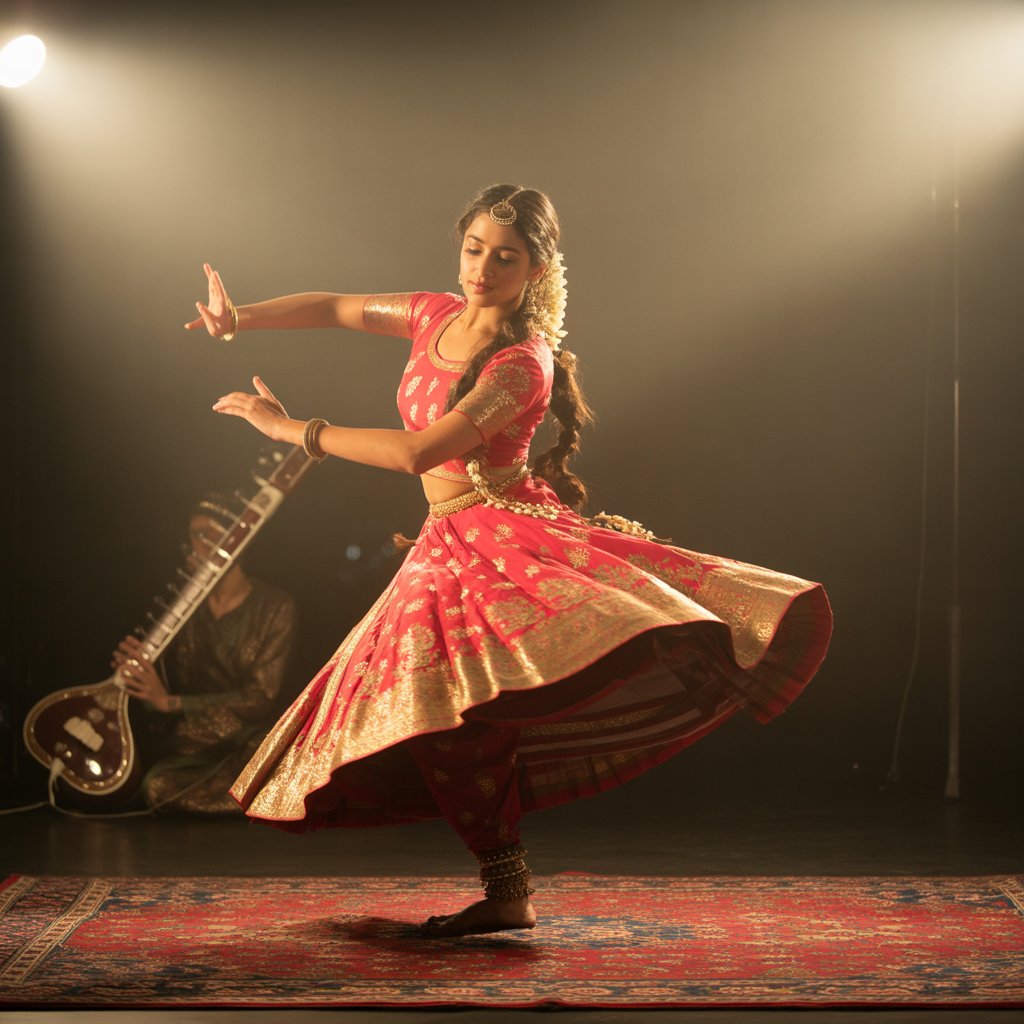
History and Origins of Kathak
The roots of this dance form trace back to Sanskrit Hindu text on performing arts called ‘Natya Shastra’ written by ancient Indian theatrologist and musicologist Bharata Muni. It is presumed that the first complete version of the text was completed between 200 BCE to 200 CE, but some sources mention the timeframe to be around 500 BCE and 500 CE. Thousands of verses structured in different chapters are found in the text that divides dance in two particular forms, namely ‘nrita’ that is pure dance which comprise of finesse of hand movements and gestures, and ‘nritya’ that is solo expressive dance that focuses on expressions.
Russian scholar Natalia Lidova states that ‘Naatya Shastra’ describes various theories of Indian classical dances, including the Tandava dance of Lord Shiva, methods of acting, standing postures, gestures, basic steps, bhava, and rasa. Mary Snodgrass states that the tradition of this dance form is traced back to 400 BCE. Bharhut, a village in the Satna district of Madhya Pradesh, India, stands as a representative of early Indian art. The 2nd century BC panels found there illustrates sculptures of dancers in different vertical poses with arm positions that resemble Kathak steps, many of which reflect the ‘pataka hasta’ Mudra. The word Kathak is deduced from the Vedic Sanskrit term ‘Katha’, which means ‘story’ while the term kathak that finds place in several Hindu epics and texts means the person who tells a story. Text-based analysis indicates Kathak as an ancient Indian classical dance form that presumably originated in Banaras or Varanasi and then spread its wings in Jaipur, Lucknow, and many other regions of north and northwest India.
Unique Features of Kathak
Kathak stands out for its delicate balance of rhythm and expression.
- Tatkaar (Footwork): Complex rhythmic patterns created by fast and precise foot movements.
- Chakkars (Spins): Swift, elegant spins that leave the audience mesmerized.
- Mudras (Hand Gestures): Symbolic gestures used to communicate emotions and stories.
- Abhinaya (Expression): The art of conveying emotions, making stories come alive.
Gharanas (Styles) of Kathak
The word ‘gharana’ means house. Due to the coming of the British Raj, and the perception of kathak dancers as nautch girls that was held during the Mughal era, kathak gradually declined in the nineteenth century. The traditions and art were, however, kept alive by certain families and passed down orally. This resulted in the formation of three distinct forms of the dance, named after the cities in which they originated: Lucknow, Banaras, and Jaipur.
Lucknow Gharana
The origin of the Lucknow Gharana can be traced back to Sri Ishwar Prasad of Allahabad, who claimed that Lord Krishna had visited him in his dreams, asking him to rejuvenate the art of Kathak. It was carried by one of his three sons, Aduja, who trained his sons and so on. It gained prominence when it reached the courts of the Nawab of Oudh in Lucknow, Uttar Pradesh, and Mughal rulers; hence, Mughal influence is most clearly seen in the dancing style. The great-grandson of Ishwar Prasad, however, was the first to achieve critical acclaim as a dancer, and he was appointed as the ‘Guru’ of Nawab Wajid Ali Shah. His sons Binladin and Kalka carried on his legacy.
Jaipur Gharana
The Jaipur Gharana developed in the courts of the Kachwaha kings of Jaipur in Rajasthan. It was founded by Shri Bhanuja who was trained in the Tandava (vigorous dance inspired by Lord Shiva) style by a sage. His grandsons, Hanuman Prasad and Hariprasad, were known as ‘Devpari’ and received much acclaim; both were appointed to the Jaipur court. The dancers of this Gharana were mostly engaged in the courts of Hindu kings, hence old traditions of the temple dance are preserved through this style.
Banaras Gharana
The Banaras Gharana was developed by Janaki Prasad and is often called the Janaki prasad Gharana. He had three main disciples: Chunilal, Delhi Ram, and Ganeshilal, who passed down the dance to their children. Sitara Devi, the daughter of Sukhdev Maharaj, is the most famous exponent of this gharana. Today it is headed by her daughter, Jayanti Mala, and Gopi Krishna, son of Tara Devi.
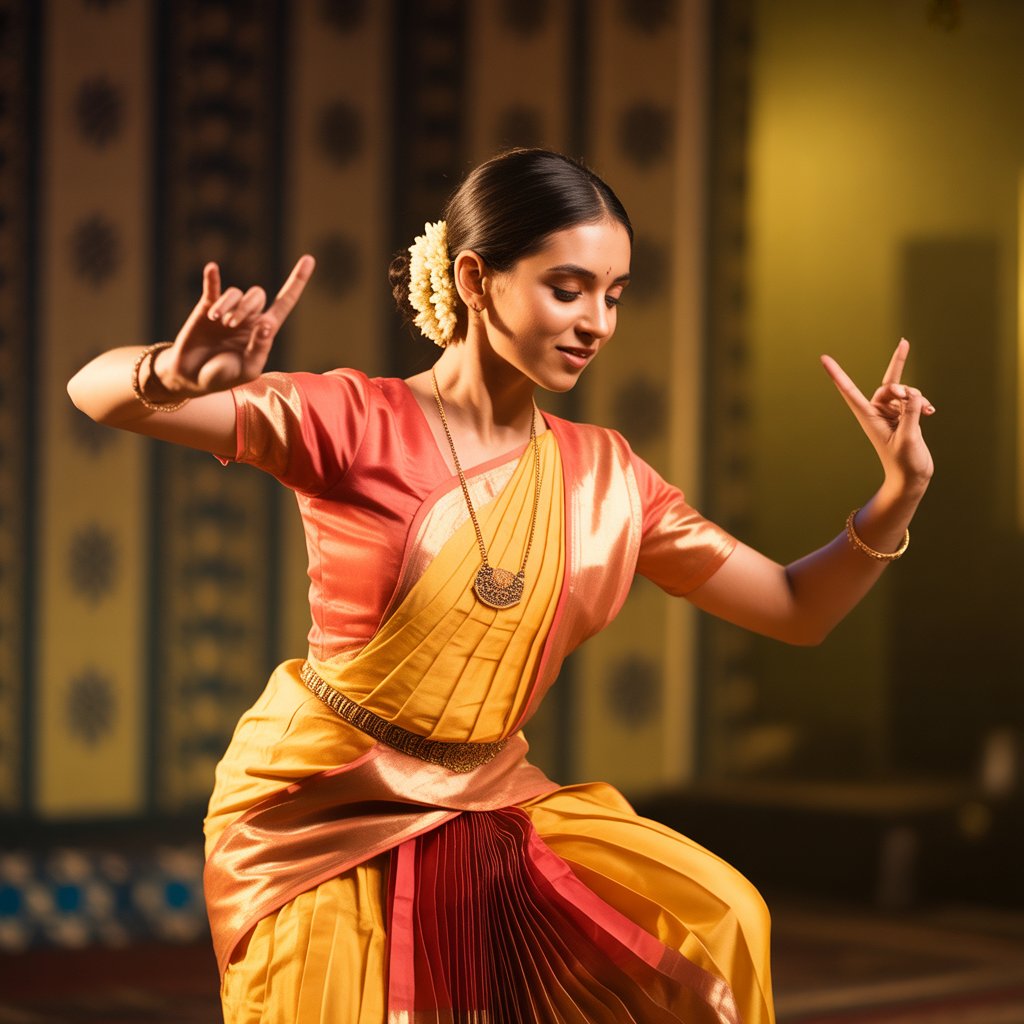
Costumes and Music in Kathak
Kathak costumes reflect both tradition and aesthetic appeal:
Female dancers typically wear Anarkali-style outfits or lehenga-choli, with flowing dupattas that enhance their graceful movements.
Male dancers usually wear kurta-churidar or dhoti, adding to the royal court-like appearance.
Ghungroos (ankle bells): A vital element, amplifying the rhythmic beats of footwork.
Music ensemble: Kathak performances are accompanied by instruments like tabla, harmonium, sarangi, and sitar, creating a soulful connection between music and dance.
Who Were The Major Patrons Of Kathak
Lachu Maharaj
Pandit Bajinath Prasad, referred to as Lachhu Maharaj was the second son of Shri Kalka Prasad, a legendary Kathak dancer and received training from his uncle Bindadin Maharaj who was the court dancer of the Nawab of Awadh for nearly 10 years.
Bajinath started performing Kathak at the age of 10 and also learnt Pakhawaj, Tabla and Hindustani Vocal Music. His family of illustrious exponents of Kathak are known to have choreographed Bollywood and several Indian cinema since their inception.
Exceptional at displaying grace, emotions, and sensuality he is known to have exported Kathak to all over the world and remains to be one of the most renowned names in the film industry.
His most notable choreography includes Mughal-e-nizam(1960), Pakeezah(1972), and he was awarded the 1957 Sangeet Natak Akademie Award by Indian National Academy for Music, Dance and Drama in 1957.
Shambu Maharaj
Pandit Shambu Maharaj born as Shambunath Mishra, was a guru of Lucknow Gharana school of Kathak. He is the youngest son of Kalka Prasad who was the court dancer of the last Nawab of Awadh.
Shambu Mahajraj started performing at the age of 8 under his uncle Bindadin Maharaj and later his older brother Acchan Maharaj. He is also known for his ‘Natwari Nritya’ and ‘Thumri’ which he learned from Ustad Rahimuddin Khan of Benaras.
He was fondly crowned as the king of emoting and is known for his titles ‘Nritya Samrat’ and ‘Abhinaya Chakravarti, won award the Sangeet Natak Akademie Fellowship in 1967 and the Padmashri in 1956.
Shovna Narayan
Shovna Narayan is one of the most renowned Kathak Dancers of India known for her strong urge for experimentation and innovation in Kathak dance form.
She was trained by legendary Kathak and classical master Pandit Briju Maharaj and Kundanlal Gangani. An author and pioneer of the dance of temples, she is known to have worked and performed at several international stages of repute.
Shovana was a career officer with the Indian Audit and Account Service and is an alumnus of Miranda House, Delhi University. She also received her M.Phil from University of Madras in Defense and Strategic Studies.
Shovana is also known to have extensively researched on ancient Kathak forms. She discovered and published a documentary on 8 Kathak villages near Gaya and she has collaborated with Epigraphy scholar Dr. KK Mishra, who discovered inscriptions of Kathak dates 4th Century BC.
She is the first to have conceived and conceptualized the philosophy of Khajuraho Temples entitled ‘Dance of Temples’ which was recognized for its great heritage value by the UNESCO.
Kathak in Modern Times
Today, Kathak is not limited to temples or royal courts — it has found its place in theaters, films, and international platforms. Dance academies across India and abroad are nurturing the next generation of Kathak dancers, ensuring that this art form remains relevant in a rapidly changing cultural landscape.
Why Kathak is More Than a Dance
Kathak is not just performance — it’s spiritual storytelling. Rooted in devotion and culture, Kathak connects dancers and audiences to India’s heritage, making every performance a soulful journey through time and tradition.
Conclusion
Kathak is a timeless art form that continues to evolve while holding on to its deep cultural and spiritual roots. Whether you’re a performer, a student, or simply an admirer of classical art, exploring Kathak means immersing yourself in a world of rhythm, expression, and grace — a true reflection of India’s classical beauty.



Pingback: "What Is the Thyroid Cartilage? Anatomy and Role in Voice Production" - a2ztrendy.com
Pingback: Exploring Kuchipudi Dance: History, Style, and Cultural Significance