

When we think about digestion, we usually imagine the stomach or intestines doing all the work. But behind the scenes, a small organ called the pancreas plays a big role in keeping our body running smoothly. Despite its small size, the work of pancreas in human body is remarkable—it not only helps digest food but also controls our blood sugar levels.
The pancreas acts as both a digestive gland and a hormone-regulating organ, which makes it one of the most important parts of our body’s metabolic system. Without it, our body would struggle to process food properly and maintain energy balance.
Structure and Position of the Pancreas
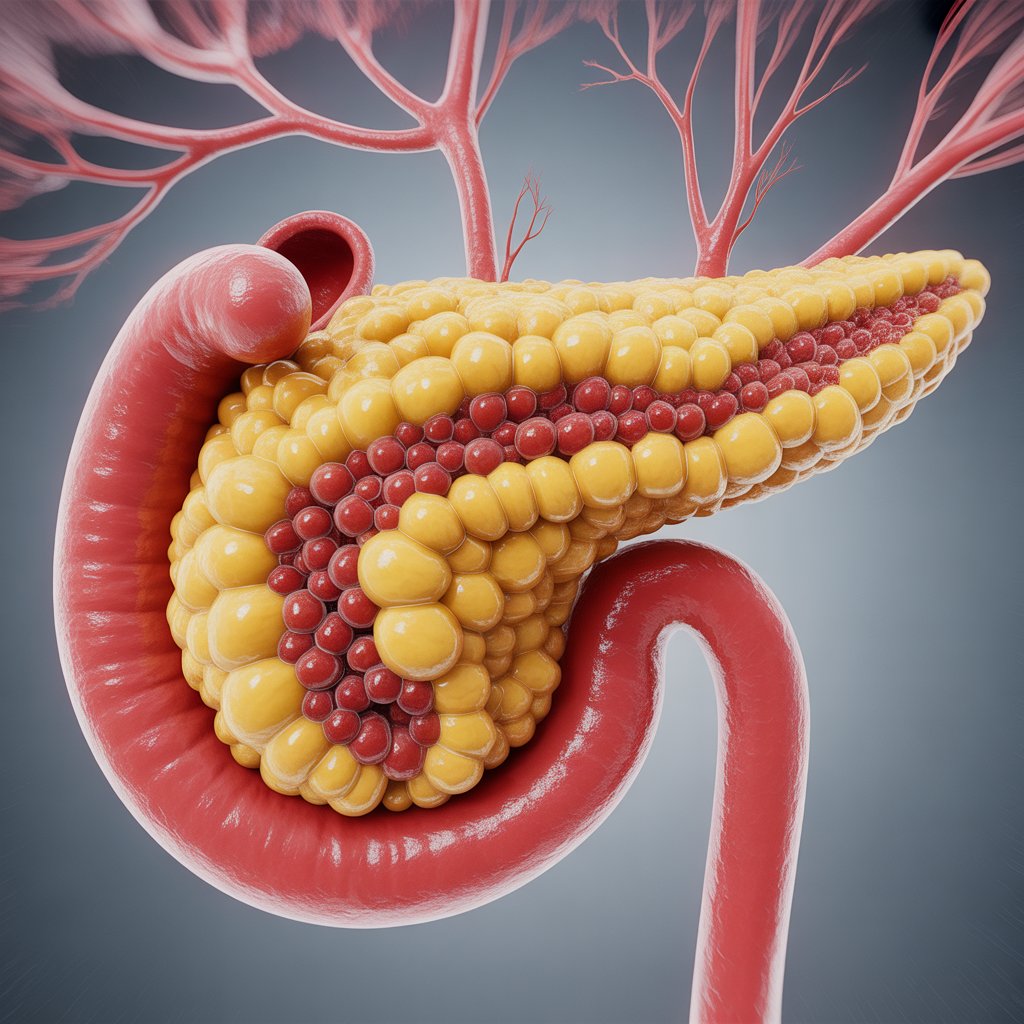
The pancreas is a flat, elongated gland located deep in the abdomen, just behind the stomach. It sits near the first part of the small intestine, known as the duodenum. Structurally, the pancreas has three main parts:
- Head: The broad part that connects with the duodenum.
- Body: The central portion that lies behind the stomach.
- Tail: The narrow end that extends toward the spleen.
A small duct system runs through the pancreas, collecting digestive juices and transferring them to the duodenum via the pancreatic duct. This strategic position allows it to release enzymes right where digestion happens.
Anatomical Parts
The pancreas is a vital gland of the digestive system located deep in the abdomen, behind the stomach. It lies in a retroperitoneal position, crossing the lower back at the level of the L1 and L2 vertebrae along the posterior abdominal wall. Structurally, the pancreas is divided into four main parts: the head, neck, body, and tail.
1. Head
The head of the pancreas is its broad inner portion that fits snugly into the curve of the C-shaped duodenum.
This part of the small intestine bends around the head, with both the descending and horizontal sections closely touching it.
It extends downward from the head and is a hook-like projection called the uncinate process, which curves behind and reaches toward the superior mesenteric artery.
2. Neck
To the left of the head lies the neck of the pancreas — a short, bridge-like segment about 2 cm long that links the head to the body. Behind the neck run the superior mesenteric artery and vein.
It is also where the hepatic portal vein begins, formed by joining the superior mesenteric and splenic veins.
3. Body
After the neck, the pancreas continues into the body, which has two main surfaces — front (anterior) and back (posterior) — along with upper and lower borders.
It lies in front of the second lumbar (L2) vertebra and forms part of the floor of the lesser sac (also called the omental bursa).
Behind the body of the pancreas are several important structures, including the aorta, superior mesenteric artery, left kidney, left adrenal (suprarenal) gland, and left renal blood vessels.
4. Tail
The final portion of the pancreas is the tail, which is located within the peritoneal cavity (intraperitoneal). It stretches toward the spleen, lying close to its hilum, and travels along with the splenic blood vessels inside a fold of tissue called the splenorenal ligament.
Dual Role of the Pancreas: A Mixed Gland
The pancreas is often called a mixed gland because it performs two completely different types of functions:
- Exocrine Function – helps in digestion
- Endocrine Function – regulates hormones and blood sugar
This dual nature makes the pancreas one of the most versatile organs in the human body.
Exocrine Function: The Pancreas as a Digestive Powerhouse
In addition to its vital role in hormone production, the pancreas serves a crucial function as an exocrine gland, contributing to the digestive system.
The exocrine portion of the pancreas is responsible for producing and secreting digestive enzymes and bicarbonate-rich fluids that aid in the breakdown and absorption of nutrients from the food we eat.
The exocrine tissue of the pancreas consists primarily of acinar cells, which are organized into clusters called acini. These cells synthesize and secrete digestive enzymes into small ducts that merge to form the main pancreatic duct.
From there, the secretions are delivered into the duodenum, the first section of the small intestine, via the ampulla of Vater, typically in conjunction with bile from the liver.
The pancreas produces a wide array of digestive enzymes, each targeting a specific type of nutrient:
Proteases (e.g., trypsinogen and chymotrypsinogen): These enzymes are secreted in an inactive form to prevent self-digestion of the pancreatic tissue. Once in the duodenum, they are activated (trypsinogen becomes trypsin) and help break down proteins into smaller peptides and amino acids.
Amylase: This enzyme breaks down complex carbohydrates, such as starches, into simpler sugars like maltose and glucose, which can then be absorbed by the intestinal lining.
Lipase: Responsible for breaking down dietary fats (triglycerides) into free fatty acids and monoglycerides, lipase works in conjunction with bile salts to facilitate fat digestion and absorption.
Nucleases (e.g., deoxyribonuclease and ribonuclease): These enzymes digest nucleic acids, breaking down DNA and RNA into their nucleotide components.
In addition to enzymes, the pancreas secretes a bicarbonate-rich fluid produced by ductal cells. This bicarbonate plays a critical role in neutralizing the acidic chyme that enters the duodenum from the stomach. By creating an alkaline environment in the small intestine, pancreatic bicarbonate optimizes the pH for enzyme activity and protects the intestinal mucosa from acid damage.
The secretion of pancreatic juices is tightly regulated by hormonal and neural signals in response to food intake:
Secretin, released by the small intestine in response to acidic chyme, stimulates the pancreas to secrete bicarbonate-rich fluids.
Cholecystokinin (CCK), also secreted by the small intestine when fats and proteins are detected, prompts the acinar cells to release digestive enzymes.
Parasympathetic stimulation via the vagus nerve further enhances pancreatic secretory activity during digestion.
Together, these exocrine functions of the pancreas are essential for the efficient digestion and absorption of nutrients. Without sufficient pancreatic enzyme secretion, a condition known as exocrine pancreatic insufficiency (EPI) can occur, leading to malabsorption, nutrient deficiencies, and weight loss.
The exocrine pancreas plays an indispensable role in digestion. Through the coordinated release of powerful enzymes and bicarbonate, it ensures that the macronutrients in food are broken down into absorbable forms, supporting proper nutrition and overall health.
Endocrine Function: The Pancreas as a Hormone Factory
The endocrine part of the pancreas is made up of small clusters of cells known as the Islets of Langerhans. These tiny islands of hormone-secreting cells are scattered throughout the pancreas and perform crucial functions that regulate metabolism.
Let’s explore the major hormones produced by the pancreas:
- Insulin:
Secreted by beta cells, insulin helps lower blood glucose levels by enabling cells to absorb glucose for energy. Without insulin, glucose would build up in the blood, leading to diabetes. - Glucagon:
Produced by alpha cells, glucagon does the opposite of insulin—it raises blood sugar levels by signaling the liver to release stored glucose when blood sugar drops too low. - Somatostatin:
Secreted by delta cells, this hormone helps regulate the release of both insulin and glucagon, maintaining balance. - Pancreatic Polypeptide:
Produced by PP cells, it aids in regulating pancreatic secretions and the digestive process.
Through this hormonal balance, the pancreas ensures that our blood sugar remains within a healthy range—neither too high nor too low.
Coordination with Other Organs
The pancreas doesn’t work alone—it operates in harmony with other organs to maintain digestion and metabolism.
- With the Liver: The pancreas releases enzymes, while the liver produces bile. Together, they help in breaking down fats and neutralizing stomach acid.
- With the Gallbladder: The gallbladder stores bile produced by the liver, and both bile and pancreatic juices enter the small intestine through a shared opening.
- With the Small Intestine: The pancreas releases bicarbonate-rich fluid that neutralizes stomach acid, creating an optimal pH for enzymes to work effectively.
This coordination ensures that food digestion and nutrient absorption occur seamlessly.
Common Pancreatic Disorders
Despite being small, problems in the pancreas can cause serious health issues. Here are some common disorders linked to pancreatic malfunction:
Acute Pancreatitis
Acute pancreatitis is an inflammatory condition of the pancreas that is painful and at times deadly. The most common cause of acute pancreatitis is stones in the gallbladder. Despite the great advances in critical care medicine over the past 20 years, the mortality rate of acute pancreatitis has remained at about 10%.
Autoimmune Pancreatitis (AIP)
Autoimmune pancreatitis (AIP) is a chronic inflammation that is thought to be caused by the body’s immune system attacking the pancreas and that responds to steroid therapy. Two subtypes of AIP are now recognized, type 1 and type 2.
Diabetes
Diabetes is a disease of metabolism, which is the way your body uses food for energy and growth. It is specifically related to the body’s inability to use glucose. Diabetes is a condition in which the body’s levels of blood sugar and the hormone insulin are out of balance. It is one of the most common diseases in the United States, and it is estimated that one in three Americans will have diabetes by 2050.
Chronic Pancreatitis
Chronic pancreatitis is inflammation of the pancreas that does not heal or improve—it gets worse over time and leads to permanent damage. Chronic pancreatitis eventually impairs a patient’s ability to digest food and make pancreatic hormones. The disease is more common in men and usually develops in persons between 30 and 40 years of age. Initially, chronic pancreatitis may be confused with acute pancreatitis because the symptoms are similar.
Keeping your pancreas healthy is vital to avoid these serious complications.
Pancreatic Cancer
ancreatic cancer is the fourth most common cause of cancer death in men and the fifth in women. It accounts for more than 37,000 new cases per year in the United States. Cancer of the pancreas is resistant to many standard treatments including chemotherapy and radiation therapy. This cancer grows insidiously and initially does not cause symptoms.
How to Keep Your Pancreas Healthy
Maintaining pancreatic health doesn’t require magic—it just needs smart choices and consistency. Here are some simple yet effective ways:
- Eat a Balanced Diet:
Include fruits, vegetables, lean proteins, and whole grains. Limit processed foods high in fat and sugar. - Stay Hydrated:
Drinking enough water supports enzyme function and prevents dehydration. - Limit Alcohol Consumption:
Alcohol is a major cause of pancreatitis. Avoid or limit it to protect your pancreas. - Quit Smoking:
Smoking increases the risk of pancreatic cancer and damages pancreatic tissue. - Exercise Regularly:
Physical activity helps regulate blood sugar and prevents insulin resistance. - Get Regular Checkups:
Routine blood sugar monitoring and health screenings can help detect early pancreatic or metabolic issues.
By following these steps, you help your pancreas function smoothly and efficiently.
Fun Facts about the Pancreas
- The pancreas produces about 1.5 liters of digestive juice every day!
- It was first identified by the Greek anatomist Herophilus around 300 BCE.
- The word “pancreas” comes from Greek, meaning “all flesh.”
- The Islets of Langerhans were discovered in 1869 by a German medical student, Paul Langerhans.
- If the pancreas stopped producing insulin completely, the human body could not survive for long without medical intervention.
These facts show how vital and fascinating this organ truly is!
🧾 Conclusion
The work of pancreas in human body is a perfect example of how small things can make a huge difference. This remarkable organ works quietly behind the scenes—digesting food, managing blood sugar, and keeping our metabolism balanced. Its exocrine role helps us absorb nutrients, while its endocrine function ensures our energy levels stay stable.
Without a healthy pancreas, our body’s entire digestive and metabolic system would collapse. So, caring for your pancreas means caring for your overall well-being.
The next time you eat a meal or feel energetic, remember—it’s your pancreas working tirelessly to keep everything in balance!


Pingback: Ptyalin Function of Saliva Explained: The First Step in Breaking Down Food - a2ztrendy.com