
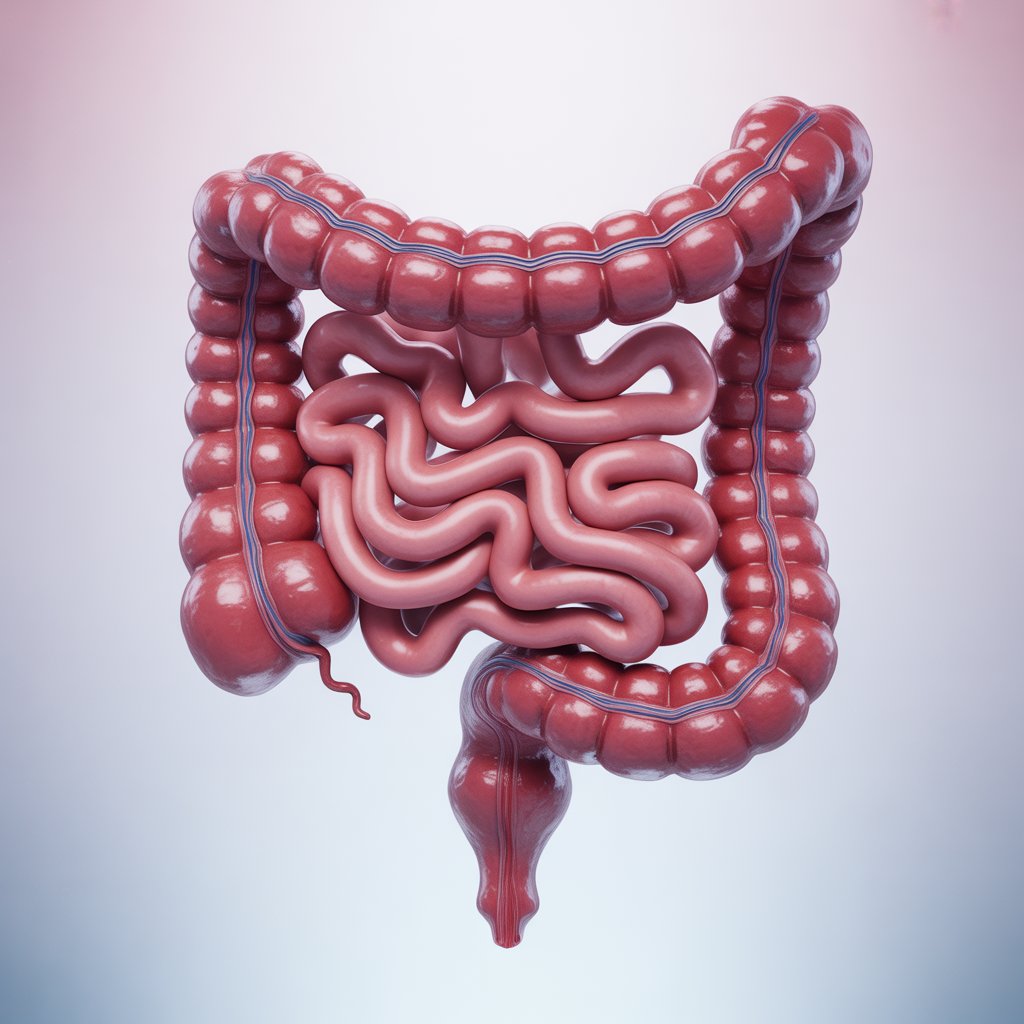

Most of us learn that digestion happens in the stomach or small intestine — but what about the large intestine? It often doesn’t get the credit it deserves. Yet, without it, your body wouldn’t be able to stay hydrated, remove waste properly, or maintain healthy gut bacteria.
The large intestine might not digest food in the traditional sense, but it plays a vital supporting role in the entire digestive process. It works silently, wrapping up everything that the rest of your digestive system starts. Think of it as the cleanup crew that keeps your system balanced and healthy.
In this article, we’ll dive into the function of the large intestine in the digestive system, its structure, and how it helps you stay healthy — all explained simply and clearly.
🩺 Anatomy of the Large Intestine
The large intestine, also known as the colon, forms the last part of your digestive system. It’s about 1.5 meters long, shorter than the small intestine but much wider in diameter — which is why it’s called “large.”
Cecum
The cecum is the first part of the large intestine. It is connected to the ileal portion of the small intestine at the appropriately named ileocecal junction. Partially digested material (chyme) makes it way through the small intestine and ends up at the ileocecal junction where the ileocecal valve opens and introduces the partially digested material into the cecum. Here, bacteria is mixed with chyme in a churning process caused by muscle contractions. It is here that the chyme begins to become feces. The cecum is in lower right quadrant of the abdomen and can be compared to a pouch in appearance.
Colon
The colon is the largest part of the large intestine and plays a key role in the final stages of digestion. It is a long, muscular tube about 1.5 meters (5 feet) in length and is responsible for absorbing water, salts, and some vitamins from the undigested food material that comes from the small intestine.
The colon is divided into four main sections:
- Ascending Colon:
- Located on the right side of the abdomen.
- Carries the liquid waste upward from the cecum.
- Absorbs most of the remaining water and electrolytes.
- Transverse Colon:
- Runs across the abdomen (from right to left).
- Continues water absorption and stores the processed material temporarily.
- Descending Colon:
- Travels down the left side of the abdomen.
- Begins to form solid waste (feces).
- Sigmoid Colon:
- The S-shaped final section leading to the rectum.
- Stores feces until they are ready to be expelled.
Functions of the Colon:
- Absorbs water and salts, preventing dehydration.
- Forms and transports feces through muscular contractions (peristalsis).
- Hosts gut bacteria that ferment undigested food and produce vitamins (like Vitamin K and some B vitamins).
In simple terms, the colon acts like a recycler and packager — it saves the body’s water and nutrients while preparing waste for elimination.
Rectum
The rectum stretches between the rectosigmoid junction and the anal canal. The typical characteristics of the large intestine (taenia coli, haustra, epiploic appendages) change or even terminate at the rectum. The roles of the rectum include temporary storage of fecal matter and defecation.
The rectum has a characteristic S-shape marked by several bends or turns; sacral, anorectal and lateral flexures. The latter correspond with three infoldings called transverse rectal folds. The rectum ends at a dilated ampulla.
Anal Canal
The anal canal is the final part of the large intestine and the last section of the digestive tract. It is a short, muscular passage — about 2.5 to 4 centimeters long — that connects the rectum to the outside of the body through the anus.
Structure of the Anal Canal:
- Lined with mucous membrane that protects it and helps in the smooth passage of feces.
- Contains two important muscles called sphincters:
- Internal Anal Sphincter – Made of smooth muscle (involuntary control).
- External Anal Sphincter – Made of skeletal muscle (voluntary control).
Functions of the Anal Canal:
- Regulates the passage of feces during defecation.
- Maintains continence (prevents involuntary loss of stool).
- Protects surrounding tissues by controlling pressure and flow during bowel movements.
In simple terms, the anal canal acts like a controlled gate, allowing waste to leave the body only when the time and conditions are right.
Main Functions of the Large Intestine
Even though the large intestine doesn’t digest food like the stomach or small intestine, it performs several important functions that keep your body in balance.
1. Absorption of Water and Electrolytes
This is the large intestine’s most important job. When partially digested food (called chyme) enters from the small intestine, it’s mostly liquid. The large intestine absorbs most of the remaining water and electrolytes like sodium and potassium.
This process helps:
- Prevent dehydration
- Maintain fluid balance
- Keep your blood pressure stable
If this process doesn’t happen correctly, you either lose too much water (causing diarrhea) or absorb too much (causing constipation). So, this step is key for keeping your system running smoothly.
2. Formation and Storage of Feces
Once the water is absorbed, what’s left behind is solid waste — or feces. The colon slowly moves this material forward through gentle muscle contractions called peristalsis.
The rectum then acts as a storage unit until it’s time to release waste through the anus. This simple process may not sound glamorous, but it’s essential for cleansing your body of toxins and undigested material.
3. Bacterial Fermentation and Vitamin Production
Here’s where things get interesting! Your large intestine is home to billions of friendly bacteria, collectively known as gut flora or microbiota. These tiny organisms work hard to:
- Break down leftover carbohydrates and fibers that the small intestine couldn’t digest
- Produce gases (like carbon dioxide and methane) as by-products
- Synthesize essential vitamins, including Vitamin K and some B-complex vitamins (like biotin and B12)
So, while your stomach and small intestine handle the heavy lifting, these microbes perform the finishing touches — creating nutrients your body can still use.
4. Production of Mucus
The lining of the large intestine secretes mucus, a slippery substance that makes it easier for waste to move along.
Mucus also:
- Protects the intestinal walls from rough waste
- Prevents irritation and injury
- Keeps bowel movements smooth and pain-free
Without this protective layer, every bowel movement could be uncomfortable or even harmful.
5. Immune Protection
Did you know that a big part of your immune system lives in your gut? The large intestine is lined with immune cells and lymphatic tissues that help detect and destroy harmful microbes.
The gut microbiota also play a defensive role — they crowd out dangerous bacteria and strengthen your body’s natural immunity. In simple words, a healthy colon means a strong immune system.
Various Large Intestine Diseases
The primary function of the colon is to absorb vitamins and fluids from the food residue right before turning them into feces. Any diseases that affect the colon will disrupt the food absorption process. Here are the details about some diseases in the large intestine that you should watch out for.
colitis:
The first disease that might affect the colon is colitis. This condition is usually marked by severe abdominal pain that can be accompanied by diarrhea and bloody stool. The exact cause of colitis has yet to be known. However, there is a suspicion that this condition might be caused by the oversensitivity of the body’s immune system toward bacteria or external matter that enter the intestine.
Colon Polyps:
The next colonic disease is colon polyps, a small lump located in the inner lining of the colon. In most cases, this condition is harmless, but in some rarer cases, it might lead to colon cancer. This condition is generally asymptomatic. However, some people might experience blood in stools and abdominal pain.
Diverticulitis:
Diverticulitis is inflammation in the diverticula (small pockets) along the digestive tract, although it is mostly found in the colon. The exact cause of diverticulitis has yet to be known. Regardless, some believe this condition is caused by consuming food that is low in fiber and high in fat. Some symptoms of diverticulitis include nausea and vomiting, bloody stools, pain in the lower left abdomen, and fever.
Irritable Bowel Syndrome (IBS):
The next disease located in the colon is irritable bowel syndrome (IBS), an irritation syndrome affecting the intestines, specifically the lower digestive tract (small intestine and colon). The term IBS refers to a group of digestive symptoms that occur at the same time. Some of those symptoms are recurrent abdominal pain, abdominal bloating, constipation or diarrhea, and many others.
Some factors that can increase the risk of IBS are stress, digestive tract infection, and gut microbiota imbalance. Moreover, some types of medications, such as antibiotics and antidepressants, can also heighten the risk of IBS.
Bowel Obstruction:
Bowel obstruction, specifically in the colon, occurs when there is a colon obstruction. This obstruction can be caused by internal causes, such as food or feces, but it can also occur because of external causes, such as tumors. This condition may induce difficulty flatulating and defecating (constipation). Moreover, it can also cause nausea and vomiting, abdominal pain, and swollen abdomen.
Crohn’s Disease:
Crohn’s disease is an inflammation of the digestive tract lining that mostly occurs in the small intestine but can also affect the colon. This disease can cause the patient to experience abdominal pain, bloody diarrhea, weight loss, and feeling easily fatigued.
There is no exact cause of Crohn’s disease. Regardless, there are some known factors that might increase the risk of this disease, such as certain medication intake (such as antibiotics), depression, and smoking habits.
Colon Cancer:
The next disease affecting the colon that you should be concerned about is colon cancer or colorectal cancer. This condition is dangerous because it is often asymptomatic in the early stage and will be more noticeable when it has developed. Similar to other cancers, colorectal cancer occurs because of genetic mutations that cause abnormal cell growth.


Pingback: “Work of Pancreas in Human Body: How This Small Organ Does Big Jobs!” - a2ztrendy.com