

Connective tissue and their types are one of the most important tissues in the human body. As the name suggests, it helps in “connecting” different parts of the body, while also supporting, protecting, and transporting essential materials. Unlike muscles or nerves, connective tissues are found almost everywhere—from bones and blood to fat and cartilage.
In biology, particularly for students in Class 11 and Class 12, as well as those preparing for exams, understanding connective tissue and its various types is crucial. This topic not only explains how our body holds its structure but also how different tissues perform specific functions to keep us healthy. In this blog, we will explore the structure, functions, and types of connective tissue with simple examples to make learning easier.
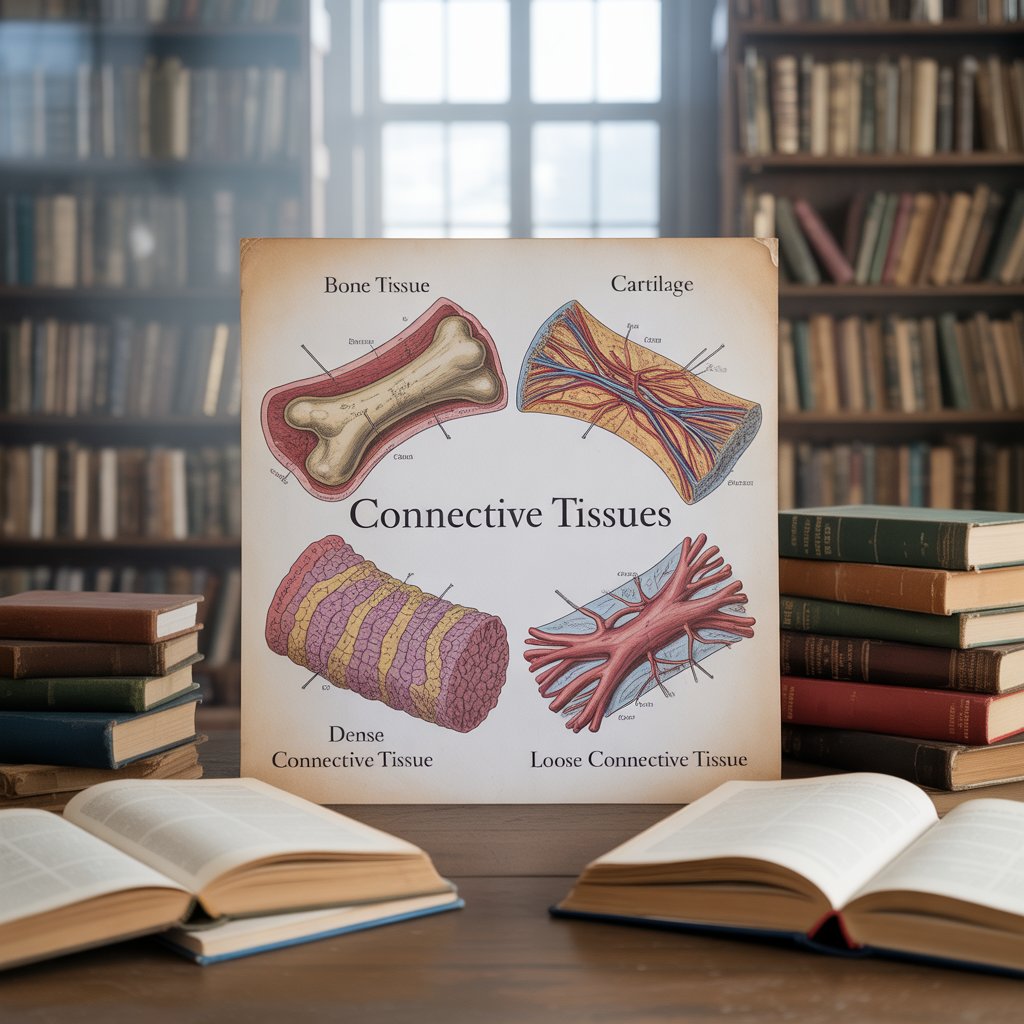
What is Connective Tissue?
Connective tissue is a type of tissue found throughout the body. Connective tissues are abundant and extensively spread throughout the bodies of complex animals. They play a crucial role in connecting and supporting various tissues and organs within the extracellular matrix.
This matrix provides strength, elasticity, and resilience to the tissues. Additionally, connective tissue contains specialized cells such as fibroblasts, adipocytes, and immune cells, which contribute to its functions. Some of these functions include wound healing, insulation, and immune defense.
Structure of Connective Tissue
- Connective tissues are composed of cells and the extracellular matrix. The cells are of different types and determine the type of connective tissues.
- The extracellular matrix of the connective tissues is composed of ground substance and fibers.
- It is present between the widely spaced cells that are often suspended in the ground substance. The matrix is responsible for the specific structure and function of the tissues as the matrix of bone is rigid and inflexible, but that of cartilage is firm but pliable.
- The extracellular fibers of the matrix are secreted by the connective tissue cells and are responsible for the functional properties of the tissue.
- The ground substance is a clear, colorless, and viscous fluid that fills the space between the cells and the fibers.
- The ground substance is composed of proteoglycans and cell adhesion proteins. The ground substance is responsible for the adhesion function of the connective tissue.
- The ground substance also serves as a molecular sieve that can travel between blood capillaries and cells, thus helping in the movement of nutrients, oxygen, and waste materials between the two.
- The cells and fibers of connective tissues are of different types and perform different functions.

Functions of Connective Tissue
Connective tissue plays many vital roles in the human body. Some of the major functions include:
Bone and cartilage provide rigidity and framework for movement in coordination with muscles.
Support and Binding
Connective tissues hold organs and body parts together.
Example: Tendons connect muscles to bones, while ligaments connect bones to other bones.
Protection
Provides cushioning and protection to delicate organs.
Example: Bones protect the brain, heart, and lungs; adipose tissue cushions vital organs.
Transport of Substances
Blood, a fluid connective tissue, transports oxygen, nutrients, hormones, and waste products throughout the body.
Storage of Energy
Adipose tissue stores fat, which acts as a long-term energy reserve and helps in insulation.
Defense Mechanism
Connective tissue contains white blood cells and mast cells that help fight infections and repair injuries.
Insulation and Temperature Regulation
Fat in adipose tissue prevents excessive heat loss and maintains body temperature.
Framework and Movement
Bone and cartilage provide rigidity and framework for movement in coordination with muscles.
Types of Connective Tissue
The types of connective tissue present in organisms are:
- Loose connective tissue: Provides support and flexibility, found beneath the skin and surrounding organs.
- Dense connective tissue: Offers strength and resistance, forming tendons and ligaments in the body.
- Specialised Connective Tissue: Includes adipose tissue for fat storage and blood as a fluid connective tissue responsible for transporting nutrients and waste.
Let’s read about each of them in detail.
Loose Connective Tissue
Loose connective tissue is a widespread type of connective tissue found throughout the body. It serves as a supportive framework for organs and binds them together, providing flexibility and cushioning. Loose connective tissue is composed of collagen and elastin fibers embedded in a gel-like matrix. It exhibits a loose arrangement of cells, fibers, and ground substance.
This tissue type facilitates the diffusion of nutrients, gases, and waste products between blood vessels and surrounding tissues. Common locations of loose connective tissues include beneath the skin (subcutaneous tissue), around blood vessels and nerves, and within mucous membranes. Adipose tissue is a form of loose connective tissue that is mostly found beneath the skin. This tissue’s cells are specialized in fat storage. Excess nutrients that are not immediately utilized are turned into lipids and stored in this tissue.
Dense Connective Tissue
The dense connective tissues are densely packed with fibers and fibroblasts. The orientation of fibers produces a regular or irregular pattern, resulting in dense regular and dense irregular tissues. Collagen fibers are found in rows between several antiparallel bundles of fibers in dense regular connective tissues. Tendons, which connect skeletal muscles to bones, and ligaments, which connect two bones, are examples of this tissue.
Dense irregular connective tissue contains fibroblasts and many fibers (mainly collagen) that are orientated in different directions. Dense connective tissue is characterized by its tightly packed collagen fibers, providing strength and resistance to tensile forces. It comprises two main types: regular and irregular.
Regular dense connective tissue exhibits collagen fibers arranged in parallel, found in tendons and ligaments, imparting strength along a specific axis. Irregular dense connective tissue, on the other hand, features collagen fibers arranged in a random fashion, offering resistance in multiple directions and found in areas like the dermis of the skin and the capsules surrounding organs. This tissue type is crucial for withstanding mechanical stress and maintaining the structural integrity of various body parts.
Specialized Connective Tissue
Specialized connective tissue is a type of connective tissue that performs specific and highly important functions in the body. Unlike loose or dense connective tissues, which mainly provide support and binding, specialized connective tissues are adapted for unique roles such as transport, storage, and skeletal support.
The main types of specialized connective tissues are:
- Cartilage
- Semi-rigid but flexible tissue.
- Provides shape and support to body parts like the ear, nose, and joints.
- Types: Hyaline cartilage, Elastic cartilage, and Fibrocartilage.
- Bone (Skeletal Tissue)
- Hard and rigid connective tissue.
- Provides structural framework, protects vital organs, and helps in movement.
- Stores minerals like calcium and phosphorus.
- Blood
- Fluid connective tissue.
- Transports oxygen, carbon dioxide, nutrients, hormones, and waste products.
- Plays a key role in immunity and maintaining homeostasis.
- Lymph
- Colorless fluid connective tissue.
- Helps in immunity and returns excess fluid from tissues back to the blood circulation.
Examples of Connective Tissues in the Human Body
Connective tissues are present in almost every part of the body. Each type has a special function that supports life processes. Some common examples include:
- Tendons
- Connect muscles to bones.
- Help transmit force during muscle contraction for movement.
- Ligaments
- Connect bones to other bones at joints.
- Provide stability and flexibility to joints.
- Adipose Tissue (Fat)
- Stores fat as an energy reserve.
- Provides cushioning and insulation to organs.
- Cartilage
- Found in joints, nose, ear, trachea, and intervertebral discs.
- Provides flexibility, smooth movement at joints, and structural support.
- Bone
- Forms the rigid skeleton of the body.
- Protects internal organs (like skull protects brain, ribcage protects heart and lungs).
- Blood
- A fluid connective tissue that circulates throughout the body.
- Transports oxygen, nutrients, hormones, and waste.
- Lymph
- A fluid connective tissue, clear in appearance.
- Helps in immunity and returns excess tissue fluid to the blood.
Connective Tissue Disorder
Some of the disorders of connective tissue are:
Ehlers-Danlos Syndrome (EDS): A group of genetic disorders affecting the production and structure of collagen, leading to hypermobility of joints, skin fragility, and other connective tissue abnormalities.
Rheumatoid Arthritis: An autoimmune disorder where the immune system attacks the body’s own tissues, primarily affecting the joints and causing inflammation, pain, and eventual joint damage.
Systemic Lupus Erythematosus (SLE): Another autoimmune condition that can affect various organs and tissues, including the skin, joints, kidneys, and heart, leading to inflammation and tissue damage.
Scleroderma: Characterized by abnormal growth of connective tissue, leading to thickening and hardening of the skin and other organs, often causing vascular and organ complications.
Marfan Syndrome: A genetic disorder affecting the connective tissue, resulting in abnormalities in the skeletal system, cardiovascular system, and eyes, leading to features like long limbs, aortic aneurysms, and lens dislocations.
Conclusion
Connective tissue is truly the body’s “support system,” present almost everywhere and performing multiple vital roles. From holding organs together and protecting delicate structures to transporting nutrients, storing energy, and defending against infections, it ensures the body functions smoothly.
By studying the structure, functions, and types of connective tissue, students can clearly understand how bones, cartilage, blood, lymph, tendons, and adipose tissue all work together to maintain health and stability.
For exam preparation, always remember: connective tissues are not just about connection—they are about support, movement, protection, and life itself.


Pingback: Phylum Platyhelminthes Classification: Simple Guide with Examples - a2ztrendy.com
Pingback: Mucous Cells Function in Stomach: How They Protect the Stomach - a2ztrendy.com
Pingback: Which is The Largest Flower in World And Where Does It Grow? - a2ztrendy.com